8.13.2015

10 trends that will reshape waste management - Trend #1: Internet of Things

Following my latest blog, I will continue writing about the 10 trends that will reshape what is called "waste management" today.  It is mentioned that Circular Economy is not included in this list because it is considered more as a background concept that influences all the current trends and less as a trend itself (see my earlier posts about it). 

So, Trend#1: Internet of Things


Maybe a lot of people are already involved in the rumours around Apple's new iPad and its multitasking capacity. However, the revolution is much wider.


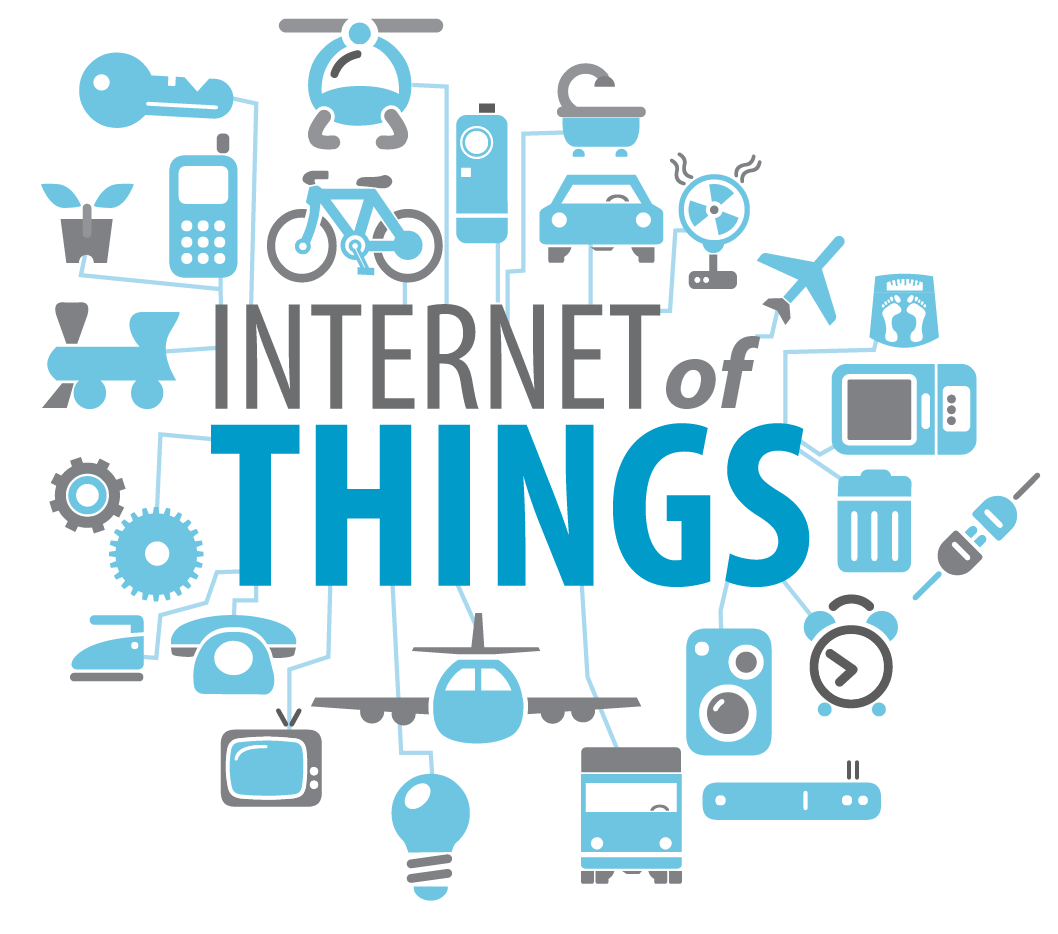
The convergence of the current web with the emerging web of sensors (already more than 13 billion sensors are on-line worldwide and they are expected to be more than 30 billion in 2020) and the growing web of small energy generators will create new unprecedented opportunities and threats. The pace of change is very fast, already Google Cloud Platform's entire big data suite is available.


The deluge of data generated by transactions, medical and legal records, videos, social media, sensors, cameras, bar codes and transmitters embedded in the world around us has an enormous economic and technology potential. 


However, I believe the most important change is another one. There is a fundamental change underway in how the world solves problems like poverty, gender based violence and environmental degradation. In the past, these problems were mostly left to national governments and international bureaucracies. Today, there are hundreds or maybe thousands emerging “global solution networks” where self-selecting networks of individuals and organizations convene across sectors to advance their own solutions. In many cases, these emerging solutions are more agile, innovative and effective than the traditional state-based institutions. 


In the new, networked model of problem solving, technology provides the enabling platform on which diverse participants come together to develop and implement solutions to global problems. Technology not only fosters low-cost connectivity across borders but also provides a richer palette of data, tools and techniques with which to transform the way we solve global challenges. 


The proliferation of RFID, satellite imagery, cheap personal video recorders, smartphones, and a global grid of wireless sensors have driven quantum leaps in the amount of Internet-collected data available to scientists and policy makers. Robots will be also available for many waste management applications - just have a look at the recent MIT's robotic bartender and you will get an idea of the future. Besides all, the development of low cost and high connectivity sensors is expected to transform the design, construction and operation of all kind of facilities and it is expected that sanitary landfills will also benefit a lot from that. 


There will be many and radical impacts to waste management. Let me just mention some of them. The Internet of Things will make zero waste approaches and circular economy a tangible reality for everything that's worthy enough to hold a sensor. Or just imagine what driverless cars will mean for waste collection systems, in a world where mobile apps are already available for connecting cars!. It will redefine the very concept of "waste" and it will boost the replacement of ownership with the service model. It will also redefine the way we design and implement logistics and facilities, creating new hybrid models where citizens and equipment will interact continuously towards optimisation targets. At the same time, it will create new ways for preventing and reducing waste in all the phases of the life-cycle of a product. And this is just the beginning of the third industrial revolution. You better be ready for radical changes within next 10-15 years. 


I hope that those changes will be helpful (of course subject to their use and social context) to tackle the global environmental challenges that are still underestimated: just yesterday, Global Footprint Network announced that humanity has spent our planet's budget for the entire next year! But, remember, this is just Trend #1  - much more are coming

8.03.2015

The future of waste management as seen from Mars: the context

Well, sometimes I wish to travel with NASA's Curiosity, this magnificent spacecraft that has already provided us with many unique pictures and insights from Mars (some recent can be seen here). And I wish to be there just to see our blue planet from a distance and try to imagine, from such a time and space distance, the future of our planet and of course, the future of waste management. Some of you already know that I like to think a lot about the future, in many different ways.

My article on the future of waste management around 2030 has been a huge success, with hundreds of thousands readers. I guess this is time to rethink on that specific subject and this is not only by ...Curiosity. This is also because our world is changing much faster than we are able to adapt to the changes, faster even than McLaren 650S, this great piece of science and technique advances, which is going to be replaced in 2018.

Although it is very difficult to identify future trends with a relative certainty (as Niels Bohr put it “prediction is very difficult especially about the future”), there are certain ways that are helpful in order to outline the key-trends. First of all, the future of waste management should be studied in the context of the future trends of our world. Waste management is an integral part of our day to day life and the major shifts that affect people’s daily lives, in one or another way, affect behaviours, technologies, logistics and finally waste management arrangements too.

Listening to industry experts is a certain way to understand some future trends, especially the ones that are more close to industrial innovation activities. Industry experts are familiar with the major problems that they face to their day-to-day activities and they create the conceptual basis for the future improvements required, although this is usually done through continuous optimization procedures rather than radical shifts. Studying the evolution of research topics and activities, talking with researchers and following the most important scientific publications is another key-element to identify issues related to the future of waste management. A sensitive and careful analysis of the major research priorities and trends creates a good picture of “what’s next”. 

So, in my next blogs, I will present the major trends that I believe they will reshape the future of waste management and recycling industry. But let's start from the general global context.

We are living in an era of rapid technological growth that generates game-changers like drones, driverless cars, sensors for everything, big data systems, the web of machines and interconnected things etc. There is a growing literature that characterizes our era as the most transformative period of modern history. 

Information technology is entering the big data era. Process power and data storage are becoming almost free; networks and the cloud will provide global access and pervasive services; social media and cyber-security will be large new markets. This growth and diffusion will present significant challenges for governments and societies, which must find ways to capture the benefits of new IT technologies while dealing with the new threats that those technologies present. Fear of the growth of an Orwellian surveillance state may lead citizens particularly in the developed world to pressure their governments to restrict or dismantle big data systems. But the technological progress runs faster than Usain Bolt. As an example, see the recent Obama's call for 1 Exaflop super computer in next decade.

New manufacturing and automation technologies such as additive manufacturing (3D printing) and robotics have the potential to change work patterns in both the developing and developed worlds. In developed countries these technologies will improve productivity, address labor constraints, and diminish the need for outsourcing, especially if reducing the length of supply chains brings clear benefits. Nevertheless, such technologies could still have
a similar effect as outsourcing: they could make more low- and semi-skilled manufacturing workers
in developed economies redundant, exacerbating domestic inequalities. For developing economies, particularly Asian ones, the new technologies will stimulate new manufacturing capabilities and further increase the competitiveness of Asian manufacturers and suppliers.

Breakthroughs, especially for technologies pertaining to the security of vital resources—will be necessary to meet the food, water, and energy needs of the world’s population. Key technologies likely to be at the forefront of maintaining such resources
in the next 15-20 years will include genetically modified crops, precision agriculture, water irrigation techniques, solar energy, advanced bio-based fuels, and enhanced oil and natural gas extraction via fracturing. Given the vulnerabilities of developing economies to key resource supplies and prices and the early impacts of climate change, key developing countries may realize substantial rewards in commercializing many next-generation resource technologies first.

New health technologies will continue to extend the average age of populations around the world, by ameliorating debilitating 
physical and mental conditions and improving overall wellbeing. A recent example considers the world's first braille smartwatch that allows blind people to read i-phone messages. The greatest gains in healthy longevity
are likely to occur in those countries with developing economies as the size of their middle class populations swells. The health-care systems in these countries may be poor today, but by 2030 they will make substantial progress in the longevity potential of their populations; by 2030 many leading centers of innovation in disease management will be in the developing world.

So there is a major question: will technological breakthroughs be developed in time to boost economic productivity and solve the problems caused by a growing world population, rapid urbanization, and climate change?

The answer to this question depends a lot on (global, national and local) governance patterns and their evolution. During the next 15-20 years, as power becomes even more diffuse than today, a growing number of diverse state and non-state actors, as well as subnational actors, such as cities, will play important governance roles. The increasing number of players needed to solve major transnational challenges—and their discordant values—will complicate decision-making. Prospects for achieving progress on global issues will vary across issues. The governance gap will continue to be most pronounced at the domestic level and driven by
rapid political and social changes. The advances
during the past couple decades in health, education, and income—which are expected to continue, if not accelerated in some cases—will drive new governance structures. 


The widespread use of new communications technologies will become a double-edged sword for governance. On the one hand, social networking will enable citizens to coalesce and challenge governments. On the other hand, such technologies will provide governments an unprecedented ability to monitor their citizens. It is unclear how the balance will be struck between greater IT-enabled individuals and networks and traditional political structures.  And although the debate regarding the moral aspects of this revolution is going to be much stronger and substantial, as it is the case now in India, with the block of porn sites, the pace of change will continue to accelerate. 

The current, largely Western dominance of global structures such as the UN Security Council, World Bank, and IMF probably will have been transformed by 2030 to be more in line with the changing hierarchy of new economic players. Many second-tier emerging powers will be making their mark—at least as emerging regional leaders.

So another major question is will governments and institutions be able to adapt fast enough to utilize the change instead of being overwhelmed by it?

 Well, the answers to those questions will certainly determine the future of waste management too - but we will dig deeper later on that. 

5.14.2015

Circular Economy needs more Waste Management than linear one!

While the circular economy saga is becoming mainstream (I have already written my concerns regarding circular economy in this blog), the future of waste management is somehow blurred between circular economy and zero waste concepts. And there are many people that believe that there is no future for the waste management industry as circular economy approaches will be gradually expanded and cover the most important economic sectors.

There is nothing as misleading as this belief and allow me to explain why. First of all, the circular economy concepts, as well as the zero waste approaches, require much more and not less waste management. Their implementation requires advanced management of multiple streams of materials, before they become waste but after they have been discarded from the main production. Those streams must be as clean as possible in order to have high added value, so advanced treatment for removal of residuals will be required, in one or another way. And of course, there will be always residuals looking for appropriate final sinks, including energy recovery where this is possible.

A second reason is less obvious. Circular economy concepts are fueled (besides other) by the problems and challenges that were identified during decades of waste management progress, especially in developed countries. Gradually, through positive and negative experiences, we realized that no matter how advanced would be the waste management and recycling progress, it is the production and consumption of products that finally determine the waste management dynamics and the increasing waste volumes. But no matter how circular the economy will be, since production and consumption of goods as well as their diversification will continue to rise, there will always be new waste management problems and a permanent dynamic towards cleaner, more efficient, faster and safer waste management. I am sorry but waste is simply a daily product of the urban metabolism…

If those reasons are not enough to persuade you that circular economy needs more (but also better and different) and not less waste management, have a look at Veolia’s contribution to circular economy’s discussion (see at http://www.veolia.com/en/veolia-group/media/news/circular-economy-sustainable-opportunity ).  It is more than clear that one of the biggest waste management multinationals faces circular economy as an opportunity and not as a threat. And it is not the only one, because there are more good reasons for such an approach.

Circular economy concepts, if successfully applied, will create a landscape where waste and resource management will be integrated not only on global, national or regional level but also on each and every supply chain. This means that waste management will be internalized in the relevant industrial processes, as a key-component of them.  This is a new business challenge for an industry that knows how to make money from residual streams. And for some people, the business case will be similar to the software. Software development and applications are required in each and every modern industry and they are becoming a core element of it – this is a blue ocean for the software industry, despite the fact that most of the big companies have internalized their software applications and they have their own IT departments.  A similar case should be expected for waste management too.

Last but not least, it is always good to remember that the waste management sector makes already an important contribution by delivering closed loops for specific materials, recovering energy potential and ensuring safe disposal for the non-recyclable part. We are far away from being “as good as we can”, but I believe that the sector’s resource added value is rather underestimated. It is time to justify it in a better and more integrated way.

So keep your eyes open, because within next months, ISWA’s Task Force on Resource Management will publish its report on resource efficiency and the role of the waste management sector. For a starter have a look at http://www.iswa.org/iswa/iswa-groups/task-forces/task-force-details/tf/show_detail/task-force-on-resource-management/

For the main course, join ISWA 2015 conference in Antwerp (http://iswa2015.org)