Showing posts with label GHGs. Show all posts

10.23.2015

Hurricane Patricia and Future Trend #6: Climate Change

Hurricane Patricia headed toward southwestern Mexico yesterday, as a monster Category 5 storm, the strongest ever in the Western Hemisphere that forecasters said could make a "potentially catastrophic landfall" later in the day, according the latest reports.   The hurricane is expected to bring accumulated rains ranging from 6 to 12 inches which could easily produce "life-threatening flash floods, mud slides (especially in areas of mountainous terrain), and high winds up to 130 m.p.h.," NOAA warns.
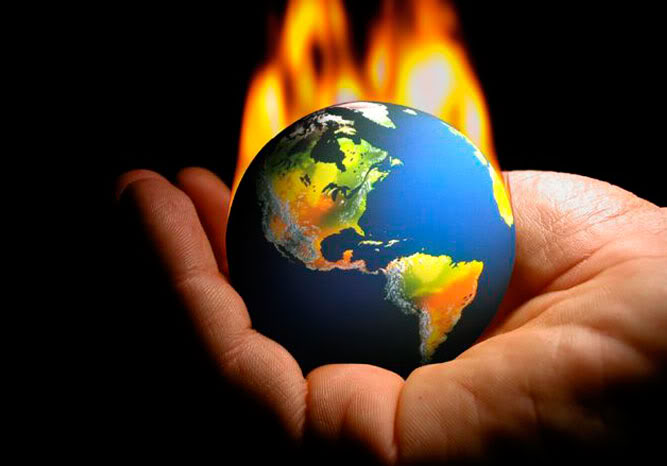
Well, this hurricane is one more extreme wether phenomenon and there are a lot of great research papers for the relation between climate change and extreme weather phenomena (this is one I like a lot by the Norwegian Meteorological Institute). And as much as we are preparing our cities to adapt themselves in the new emerging climate patterns, as much we should realise that waste management and recycling patterns will be certainly affected a lot by the climate change policies and science. 
Obviously, a first influence regards the financial resources: already there are a lot of funds available for waste management activities related to GHGs reduction (have a look at Climate Funds Update for more).
Another, also obvious trend regards the global cooperation required for fighting climate change - it seems that we are on the way for a new agreement in Paris. Countries have agreed that they would adopt a new climate agreement in 2015 at the Paris Climate Conference this DecemberThe Paris 2015 Conference needs to result in the adoption of an international agreement, setting the framework for a transition towards resilient, low-carbon societies and economies. The Conference has the potential to mark a decisive step forward in the negotiation of the future international agreement that will enter into force in 2020,  with the aim that all countries, including the greatest greenhouse gas emitters – both developed and developing countries – should be bound for the first time by a universal climate agreement. 
In case this global agreement is achieved, then there will be a lot of new instruments to motivate GHGs reduction and certainly waste management sector will benefit of them. As an idea of the actual expectations and intentions of the recycling and waste management industry, the recent ISWA's Declaration on Climate Change and Waste Management provides a brief but thoughtful overview. 
But there are further, not so obvious impacts. 

Globalisation of environmental impacts: GHGs and marine litter are the most obvious ways to highlight that local SWM has a global environmental footprint. Under the current conditions and the global political agenda about Climate Change, the link between SWM and GHGs is the most important tool to create a universal understanding for how our local decisions in SWM contribute to global phenomena.

GHGs and the sense of time: human beings tend to underestimate or even ignore the importance of events that are out of their natural time scale. GHGs impacts are also a very good example in order to prove how previous and current SWM practices create Long Term results which substantially deteriorate the life of future generations.
GHGs and developing countries: I think that the global agenda for GHGs provides a unique opportunity to rethink the way international aid or Official Development Assistance (ODA) is distributed - there are many problematic situations at this field and the most important ones are two. A. the overall amount of ODA related to waste management is ridiculously small (less than 0.3% of the overall ODA) and, B. the poorest countries receive much less support than the developing to developed ones. This has been proven by a report that was made within the framework of the "Globalisation and waste management" project that was implemented by ISWA - for more check "A review of international development cooperation in Solid Waste Management".  If we are going to fight seriously the Climate Change, if we are going to prepare substantial adaptation and mitigation plans, then certainly we need to change completely the way ODA is managed. 
And last but not least is the challenge of adaptation, which is certainly underestimated when we speak about waste management. I have written again about it, but unfortunately nothing has changed. It seems that the most vulnerable waste management systems are the ones that happened to be in growing and transition megacities, where informal sector plays a certain role in waste management and infrastructure either is not in place or it is not adequate. In those urban areas, the environmental and health risks from a potential disaster related to waste management are really high and under certain conditions they might be proven more than local ones. Take into account that dumpsites, which are the dominant practice in those cases, are usually located at low levels and excavated with no plan and hydraulic protection and you will understand that this is a serious problem. 


1.09.2012

The problem is not with waste but with climate!

Photo from Environmentla Photographer 2009, see http://www.ciwem.org/competition-and-awards/environmental-photographer/epoty-exhibitions--events.aspx 

This post is a really important contribution from my friend Martin Steiner (General manager of TBU Austria  - see www.tbu-austria.comand Ulrich Wiegel (Consulting Engineer, see www.icu-berlin.de). I found the article very interesting and speaking frankly very close to my own perceptions about the difficulties in addressing climate change issues. It also fits a lot with my previous post http://mavropoulos.blogspot.com/2011/10/urban-waste-management-and-climate.html.

Please enjoy it (unfortunately this is just a two pages abstract of a very important article that is too long to be published in my blog - but I tried to keep the fruitful thoughts and key-messages of the authors).


"The problem is not with waste, but with climate…-how perception influence behaviour
Both solid waste and greenhouse gases are “wastes” in a broad sense, one solid, the other gaseous. The first is perceived with our senses, the other not. Solid waste is accessible to all the senses: we see, feel, smell – and even hear it, once the garbage truck arrives. The essential greenhouse gases of methane, nitrous oxide and carbon dioxide are outside our sensory capacities: invisible, odourless – and, moreover are disposed of at virtually zero cost, even allowing for the current European carbon trade system. We simply dump the gaseous garbage into the “air ocean” on the bottom of which we live.
About 250 kg of household and commercial garbage is generated per person per year. In addition, about the same amount of recyclable materials is separately collected, comprising: paper, glass, biowaste etc., altogether 500 kg of “waste” per person per year. The quantity of greenhouse gases (measured as CO2-equivalents, to which the various greenhouse gases are converted according to their relative impact) comes to about 10,000 kg of CO2-equivalents per person and year, or 10 tonnes, about 20 times the quantity of waste.
Although the green house management problem seems to be greater than the solid waste management problem, little attention has been laid on it.
Solid waste management became very quickly a major political and scientific issue in many countries worldwide, the last decades. In this sense, many technological achievements and policies have been implemented to minimize solid waste production and to limit adverse effects into the environment.
This quick response in the solid waste sector was a consequence of the following three factors: the negative impacts of improper waste treatment were quickly felt (e.g. groundwater pollution caused by dumpsites), and prompted action to be taken. Secondly, waste – through its sensory qualities – is present to some degree in everyone´s mind on a day-to-day basis – this increased the political priority to deal with it. Thirdly, the adoption of environmentally friendly waste treatment has enabled tangible environmental benefits to be quickly realised.
However, all these mechanisms do not apply to CO2-waste: damages occur only following considerable delay and are not locally connected to the source. This, together with the fact that CO2-waste cannot be perceived “sensorily”, has resulted in less intense countermeasures being taken.
It is clear that CO2-waste management depends on the existence of the problem in our perception. To be accustom this the following example is provided: If somebody throwing a noticeable piece of paper litter out their car window every two seconds for a minute, over one kilometre, resulting in 30 pieces of litter lying on the road, altogether maybe 150 g of waste that would be noticeable and annoying. If at the same time, the car has left behind 150 g CO2 over the one kilometre “on the road” via its exhaust that would not be noticeable and therefore not being annoying– so it does not exist in our perception.
On further reflection, if CO2 were solid, the greenhouse gases management problem would have already become a major issue some 80-100 years ago, with the rapid expansion of electricity production and industrialization. Surrounded by rising CO2-ash heaps from these activities, the notion to transport a human body weighing around 100 kg using a vehicle weighing more than 1,000 kg, thus a payload of less than 10 % of the total mass, resulting in more than 90 % energy loss, which is clearly too high as a proportion of energy inherent in the system, would have been promptly rejected.
We have after all direct experience of the banning of forms of energy consumption that produced atmospheric pollution which is obvious, we could see smell, and even taste it, and in terms of fatalities: in most of Europe in the middle of the last century laws were introduced to limit particulate atmospheric pollution (‘smog’) through smoke control. Within a few years people willingly gave up burning coal to heat their houses and water, because they could see both the problem and the benefits of action.
For these reasons CO2-waste management has been developed with considerable lower rates than the solid waste management sector. It is characteristic in the case of Austria that although a number of measures, introduced in a successive 10 years period, have already solved the waste ‘problem’ by nearly 100%, a reduction within 30 years of fossil-based greenhouse gas by 16% has only been announced.

Recycling is easy and makes us feel good – avoidance is hard and an annoyance

Another important difference between solid waste management and CO2-waste management is that the first is largely based on Recycling and the second is base on Avoidance. Recycling does not work with CO2-waste which final and only option is disposal-either by conventional dumping into the ‘air ocean’ or by innovative subterranean storage. So, a fundamental partial solution for reducing CO2-waste is avoidance and that means abstaining from consumption, which people are reluctant to do because they love convenience, and because they do not suffer enough immediately from the problem.
With over 100 years of increasing CO2 output, the unspoken assumption has been made that its disposal would not cause environmental damage. Until science could at long last agree that there would be any damage at all, technology and society developed into a state of enormous – because of its free-of-cost – CO2-waste production. The acknowledgement of the damage, and acceptance of the soon-to-be enforced CO2-levies will be, unlike for solid waste, clearly more difficult, as a) the damage is a future damage, is not clearly defined and not locally felt b) the existing social and economic system would be hit hard – one may imagine that all 10 tons CO2 per person per year would be charged per tonne analogous to waste treatment with say 100 € (which is the cost for one tonne of avoided CO2 for renewable energy technologies) and c) for this investment no reliable and auditable outcome can be assured.
At this point a philosophical consideration of the avoidance issue is necessary: Although technical innovations are important to avoid CO2-waste a society-wide ‘value change’ is rather critical to be achieved.
It is obvious that as humans – apart from the securing of our basic survival needs – we ultimately aim for one thing: to be happy (according to competent studies “happiness” is the least common human condition by the way, and not attainable by directly trying). Now, happiness is a condition that exists only in our minds and is generated in essence by ourselves and our emotional response to external influences.
In this direction ‘Low energy happiness generation behavior’ is consider a key factor leading to climate protection. This means that, if we can produce in ourselves the same level of happiness with reduced material and energy consumption, it can be referred to as climate friendly happiness. The initially noticeable satisfaction “loss” caused by abstention and effort is counterbalanced by the satisfaction “benefit” caused by the certainty of “doing the right thing”. This has already been achieved with waste. If we were able to imagine greenhouse gases “materialized” in solid form we would be able to create within us an increasingly greater sense of happiness from the initially unpleasant sacrifice associated with “doing without”.
On the other hand we realize that in the waste sector we have – with the participation of the broader community and developments in technology and organizational framework – been able to achieve something which, at the end of the seventies, was also unimaginable. In the area of climate protection, technology, while vitally important, will not provide the whole answer; the challenge remains to shift our philosophical basis and value set. Only then will meaningful and efficient outcomes be achievable.
The technical/scientific knowledge for implementing a climate-related change of values is available and is gathering momentum. It is now a priority to keep this change of values in our conscience, and to increase its perceived importance. In the area of climate protection, technology, while vitally important, will not provide the whole answer; the challenge remains to shift our philosophical basis and value set."


1.05.2012

La Pintana: an awarded solid waste project

Some months ago, during the International Conference on Waste Minimization and Recycling of the International Solid Waste Management Association (ISWA) in Buenos Aires, the IDB and the FEMSA Foundation awarded the Water and Sanitation Prize for Latin America and the Caribbean in the category of Solid Waste Management to the La Pintana Municipality of Santiago, Chile, for its strategy of source separation, selective collection, and treatment

During November, in an IDB seminar in Mexico, I met Gustavo and sharing I learnt more about the La Pintana project and asked him to write about it. This is what Gustavo has prepared – thanks a lot Gustavo for this contribution, I really appreciate it and I think La Pintana serves as a good example of realistic solutions for transition countries and medium size municipalities. 


"Through this project, which was developed in the framework of Local Agenda 21, in response to the challenges posed by the Kyoto Protocol, of which Chile is a signatory, so that cities will face the challenges of socio-environmental in the present century, the Municipality of La Pintana, located south of the metropolitan region, in Santiago de Chile, with 201.178 inhabitants, has been encouraging in the Commune willingness to take charge of the integrated waste management, treating directly the fraction of vegetables residues eliminating the disposal of them in the landfill, producing significant savings for the municipal budget, not only the disposal in the landfill, the Municipality also paved the way for implementing treatment facilities for these wastes, promoting recovery and treatment of them through composting and vermiculture.


The old department for Cleaning and Ornament in the municipality was transformed in the Directorate for Environment Management (DEM), This Directorate have today four units, Green areas, Environment Health, Environmental Operations and Environmental Education. To do more effective it work The DEM has divided the commune in five operative sectors, where the four units have representation like a little (mini) DEM. Through them the DEM performed their activities for Local Environment Management (GAL for their acronym in Spanish)
The DEM did en 2003 a characterization for their Municipal Solid Waste (MSW). The DEM established that the most important fraction in the MSW in La Pintana was the vegetable fraction, (more of 56% in the summer), with this reality the DEM took the resolution to do an effort to work with those waste and gave them a value, started a program when the community must separated the vegetable waste in their houses (separation at source) and give them to truck that collect this fraction. The wastes are transported to the treatment plant built at the commune center, where the wastes are treated trough composting and a reduction treatment with the Californian’s red worm (Eisenia Foetida). 
The above mentioned treatments generate two high value products, the composting and humus. These products are handled by the municipal plant nursery, used as tree, shrubbery, plant and flowers substratum, that come back to the commune in green areas, grounds parks, so improving the life quality of the people living in La Pintana.  
The mainly actors especially in this program are the inhabitants of La Pintana, without them the program can not have a real sense.  At the first time was necessary to sensitize the people of La Pintana. Explained to families, the scope of the program how to sort and deliver the vegetal fraction. Together with this work the DEM has develop an educational program free of charge for the inhabitants of the commune, this has developed a strengthened the relationship between the municipality and community. These processes easy can be replicated by any other municipality.
The sensitization reach initially around 17.000 families, In 2010 the DEM in an additional effort reached contact with other 20.000 families this gave a total of 37.000 families and this represent the 82,2% of the total inhabitants in the Commune.
As a result of this communal program the Directorate for Environmental Management can treat around the 30% of the total vegetable waste of La Pintana in their own plant for composting and vermiculture. This process has aided the commune to obtain very easy, the middle environmental certification of the Chilean ministry for environment. The commune has become a pioneer in their program for Local Environmental Management in a national level. The contribution of the DEM to a sustainable development is reflected not only in saving cost to the municipal budget generated from the process for the separation at source and their treatment as described above, but especially in a greater contribution to a better environment in Chile.
How the saving cost generated from the Directorate of Environmental Management activities, are transferred to the Social development in La Pintana?. The municipality has a sport stadium, with 22 sport schools; the young through the sport have the opportunity to avoid the drugs and delinquency. In a commune with high conflict and social problems (La Pintana is considered a homogeneously poor commune) can said that thanks to DEM work, La Pintana have a  South American champion in athletics disciplines. This has been generated by the virtuous circle of the sustainable development. Environmental work, generate economy for the municipal budget, this cost saving are transferred to the Social development of the inhabitants of La Pintana.  
The precious work of the 120 people that work at the DEM, and their contribution to a commune with scarce resources, has been awarded with several national an international awards, for example, the award from “The Peace House” in 2009. “The AVONNI 2010” (Avonni is backwards innovation in Spanish) where the DEM participate together with other 550 projects for this national award. La Pintana won with their project “Transformation of waste cooking oil in biodiesel”. In 2011 the prize granted by the IBD-FEMSA organizations, obtained the award for the good practices in Solid Waste Management. The results that the Directorate for the Environmental Management has obtained can be summarized in the following achievements:
Diminishing of the waste volume transported to the landfill.
Make a significant cost saving to the municipal budget.
Change the common leave earth as substrate for a high quality composting, that bring real nutrients to the soil.
Reuse the pruning’s remains in a creative way for the elaboration of composting.
Minimize the loud and smog contamination, due to less trucks circulation to the landfill.
Sensitize the community about the need to minimize the household waste
Diminishing of the greenhouse gases, due to less transport and the use of biodiesel, because the maximum distance from each point of the commune to the treatment plant is only 1 kilometer. Compared with disposal of waste in the landfill distant 12 kilometers away from La Pintana.


Gustavo González A. 
(Ph.D.Chem.Eng). 
Manager of the treatment plant for SW. 
Directorate for Environmental Management. 
Municipality  La Pintana. Santiago-Chile."

For more see the video and the article - the video is in Spanish as well as the official  press release

12.09.2009

Global warming: a public threat?

Contribution by George Sbokos (info@ecothesis.gr)

Dear Antonis,

thanks for delivering the ISWA White Paper Summary on Waste and Climate Change. I hope your message will be a part of the decision making proccess in Copenhagen. On the same day, the 7th of Dec. “…an important piece of news came from the U.S.: the Environmental Protection Agency found that the gases contributing to global warming threaten public health and opens the way for establishment of standards regardless of developments in Congress…”. So I first had to ask myself, how tight could the american evaluation range of the importance of global warming be, in order to be understood and manageable only as a "public threat".

Then I questioned if is it not a matter of a tight evaluation range. The Irak and Afganistan issue had to be labeled as a “terrorist threat” in order to legalize the bombardments, the H1N1 had to be upgraded to a “pandemie” in order to forward the use of untested vaccines. I came up to the conclusion that Bureaucracy and laws have to be neutralized, in order to move on with some political issues. In that meaning, “public threat” might be the key word to put the U.S. Congress off.

Even if so, that might be a "CHANGE WE CAN". I mean, till now we were only common to the famous words of President George Bush senior "the American lifestyle is non-negotiable", delivered to justify its refusal to participate in the first World Summit on Environment in Rio de Janeiro in 1992. Or the words of the George Bush junior administration in 2002, which refused to sign the Kyoto agreement on climate change and reiterated its refusal to the G8 Summit in July 2005, arguing that “the U.S. economy will be destroyed if we try to reduce emissions from industry to the levels indicated the Kyoto agreement”.

Consider, the world would only need 66,7 billions per anno to apply the goals against global warming. Consider, this amount is 12 times less than the money given to the banks last year. Consider, it represents the 2/3 of the annual worldwide military spending. Consider it is the ½ of the money given to advertisement (Le Monde, 6.12.2009).

Wish the best and raise your voice to an ambitious agreement in Copenhagen!

2.18.2009

Some thoughts regarding SWM and Climate Change

The importance of Green House Gases (GHG) in decision making for SWM systems becomes an elementary part of every discussion about the future waste management. Below you will find some questions to consider and some thoughts to share about the issue.

I do believe that half of the effort we need is to create an appropriate framework for the assessment of the link between GHGs and SWM. Although there are a lot of very useful related documents, I still believe that the necessary political framework for this discussion is loose and not well defined. For the International Solid Waste Association (ISWA, www.iswa.org ) there is an opportunity to upgrade its profile being a part of the required global drivers for such a discussion. In fact, the global impacts of SWM (as highlighted by GHGs) are an obvious documentation of the need for global action and the necessity of a global know-how provider and driver to more sustainable SWM, exactly what ISWA’s mission is! So allow me to write some thoughts trying to contribute to an initial framing.

Thoughts

Globalization of environmental impacts: GHGs are the most obvious way to highlight that local SWM has a global environmental footprint. There are also a lot of other indications to highlight (in scientific terms) a similar relation between local actions and global effects, but under the current conditions and the global political agenda about Climate Change, the link between SWM and GHGs is the most important tool to create a universal understanding for how our local decisions in SWM contribute to global phenomena.

GHGs and the sense of time: human beings tend to underestimate or even ignore the importance of events that are out of their natural time scale. GHGs impacts are also a very good example in order to prove how previous and current SWM practices create Long Term results which substantially deteriorate the life of future generations.

GHG and developing countries: obviously the GHG effects and their management play a very crucial role for the formulation of international relations and diplomacy efforts. They also have a very clear political and economical content, which is very sensitive and difficult to be avoided. But we have to avoid a direct recommendation of what has to be done in terms of technologies and systems in place. In contrast, we have to point what should be the potential next steps (usually more than one) for more sustainability and less GHG effects in every different level of SWM. We need something like “How GHG effects influence SWM” or similar. The focus should be to criteria and conceptual relations between different practices and technologies and not to a direct indication to what has to be done.

Some Questions

GHG effects should be considered as a risk or as an opportunity for SWM development? (I suggest the second)

What are the impacts to GHGs from the different SWM practices? What are the main risks for SWM systems? Are there any opportunities and where?

What are the impacts to SWM practices and the industry from the accumulation of GHGs? How Climate Change is expected to affect SWM?

What are the key – actions that should be elaborated from different SWM systems and practices in order to minimize the GHGs impacts?

Should we discuss about the economical impacts as well?

Can we categorize Short and Long Term actions?

Can we categorize actions according their effects (e.g. Small, Medium, and High)?